Holistic Parenting Solutions
Being a parent can be one of the most joyful and rewarding experiences in life, as well as one of the most frustrating and challenging. Worrying about your child or watching your child struggle adds to the stress many parents are already under with life's many demands. Children and teens are also masters in the art of pushing their parents' buttons, and despite many parents' solemn vows of "I'll never be like my parents when I have kids," you may have found yourself reacting in ways that you later regretted.
Whatever our consciously-embraced parenting philosophy, our own emotional conditioning from our families of origin exerts a powerful influence on our day-to-day interactions with our children. This programming operates on an unconscious level, perpetuating patterns that keep us stuck in less than optimal ways of behaving and interacting.
Emotional and behavioral problems rarely reside within a single individual. Scientific research in the fields of Attachment and Interpersonal Neurobiology has shown that human brains develop in a resonant matrix of other brains, the most influential of which are those of the primary care-providers. The neural connections in the brain that shape emotions and behavior are laid down in the early years of a child's development. However, once a child is past this important developmental period, there is still ample oppor-tunity to influence the outcome. Our brains possess a quality called neuro-plasticity, meaning that they are capable of rewiring their internal networks given appropriate environmental conditions.
The hopeful take-home message of this research is that that which got "broken" within a relationship, can also be healed through a relationship.
This is a big responsibility as well as an exciting opportunity for parents. It may be tempting to try to fix "the problem" with a pill, but this solution that our high-speed society is increasingly relying on comes with significant negative impacts. These range from serious and unhealthful side effects to negative long-term impacts on the child's sense of identity and competence, to masking and distracting attention from deeper underlying problems and systemic issues in the child's environment.
Healing Arts for Kids integrates support for the parent(s) and the family in order to identify the systemic issues that need to be addressed and to enhance the parents' capacity to cope.
The support offered may take the form of individual parent coaching sessions, conjoint sessions with the child, or family sessions alongside individual work with the child or teen. Referrals to holistic medical practitioners in the community to address potential physiological, nutritional, or environmental toxicity issues are also available.
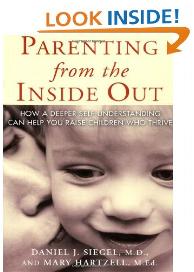
A good place to start to enhance your own resilience and coping with parenting challenges is to familiarize yourself with Daniel J. Siegel, M.D.'s book Parenting from the Inside Out: How a Deeper Self-Understanding Can Help Your Raise Children Who Thrive (New York: Jeremy P. Tarcher/Penguin, 2004). Siegel, a Harvard-trained Child Psychiatrist, and currently on the faculty of UCLA's Center for Culture, Brain, and Development, is one of the founders of the new interdisciplinary field of Interpersonal Neurobiology. In his parenting guide, Siegel lays out in simple layman's terms a groundwork for understanding important new research on the brain, attachment, mindful parenting, and the power of relationships to both harm and heal. He offers many powerful self-reflective exercises for the parent on his or her own emotional conditioning. I use this book as a helpful resource in working with children and parents.
If you would like advice on a specific parenting challenge or problem your child is having, I offer a free initial phone consultation.
Taking the first step to seek help for your child is often the hardest. Please don't hesitate to contact me - there is no obligation.
(650)326-1339

"Mindfulness is at the heart of nurturing relationships. When we are mindful, we live in the present moment and are aware of our own thoughts and feelings, and also are open to those of our children. The ability to stay present with clarity within ourselves allows us to be fully present with others and to respect each person's individual experience."
"When we become parents, we often see ourselves as our children's teachers, but we soon discover that our children are our teachers as well. Through this intimate relationship, our past, present, and future take on new meaning."
- Daniel J. Siegel, M.D., UCLA Center for Culture, Brain, and Development